


El formato de envasado de alimentos es el resultado de una coincidencia científica entre las características de los alimentos, los requisitos de almacenamiento y los escenarios de consumo. Las bolsas de pie para patatas fritas mejoran la resistencia a la rotura en un 40%, las bolsas de retorta para alimentos asados extienden la vida útil en 6 meses al aislar el oxígeno, y el diseño de la válvula de escape para comidas prepreparadas reduce la presión de microondas en un 40%. Desde la adaptación de materiales hasta estructuras inteligentes, el empaquetado está redefiniendo los límites entre frescura y experiencia del usuario.
Contenido:
El “código de formulario” del envasado de alimentos
Why are potato chips sold in stand-up bags and braised food sold in retort bags? The choice of packaging format is never accidental; it’s the result of a scientific match between food characteristics, storage requirements, and consumption scenarios. As the “close guardian” of the modern food industry, flexible packaging bags are redefining the boundaries between food freshness and user experience through innovative materials and structural design. This article will break down the packaging “codebook” for snacks, prepared foods, and pre-prepared meals, and teach you how to find the most suitable “packaging form” for different food products.
La lógica triple del código de formulario
Compatibilidad con los materiales: La textura helada de la película mate y el efecto espejado de la película brillante no solo influyen en el rendimiento protector, sino que también sirven como el "lenguaje silencioso" entre las marcas y los consumidores.
• Functional Matching: The stability of stand-up pouches and the high-temperature resistance of retort pouches must be tailored to the food’s solid/liquid form and its susceptibility to moisture/oxidation.
• Adaptación al escenario: Un diseño de cremallera reutilizable facilita el intercambio de aperitivos, y una ventana transparente permite a los consumidores ver directamente el estado de los alimentos preparados. Estos detalles revelan información sobre los hábitos de consumo.
Embalaje de aperitivos: equilibrar la resistencia a la rotura, la antiadherencia y la visibilidad: el embalaje de aperitivos debe encontrar un equilibrio entre proteger los alimentos frágiles, prevenir la pegajosidad y garantizar la exhibición en los estantes. Para categorías típicas como patatas fritas y caramelos, la selección científica de la forma y los materiales de envasado es crucial. Embalaje de patatas fritas: La revolución a prueba de rompimientos de las bolsas de cremallera Stand-Up: La naturaleza delgada y crujiente de las patatas fritas exige estrictas exigencias en el embalaje con alta resistencia al impacto. Las bolsas de cremallera de pie están hechas de película compuesta de BOPP/PE, con la capa externa de BOPP proporcionando soporte rígido y la capa interna de PE mejorando el sellado. Esto da como resultado una mejora del 40% en la resistencia a las perforaciones en comparación con los envases tradicionales. Combinado con una estructura de fondo autosuficiente, una marca de aperitivos ha reducido su tasa de daño por transporte de patatas fritas en un 30% y su tasa de daño por estante del 12% a menos del 5%.
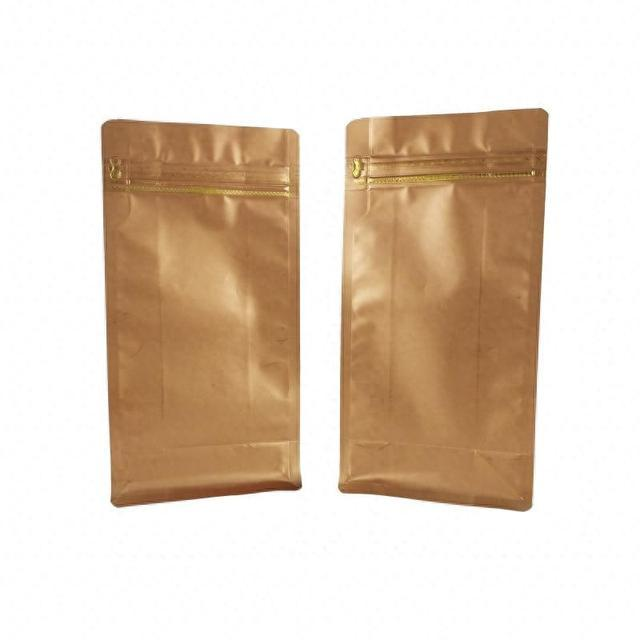
Bolsa de patatas fritas con cremallera autoportante marrón (con cierre con cremallera dorada, el diseño autoportante mejora la presencia en el estante)
El diseño stand-up ofrece ventajas significativas en el estante: la bolsa se coloca de forma independiente, lo que permite una pantalla de marca de 360 °. La cremallera superior permite volver a cerrar, abordando el punto de dolor del envase tradicional, que puede suavizarse fácilmente debido a la humedad después de la apertura. Esto ha resultado en un aumento del 22% en la intención de recompra del consumidor.
Candy Packaging: Anti-Stick Solutions for OPP/CPP Composite Bags: OPP/CPP composite bags offer a perfect solution to the sticking problem of candy snacks. The outer OPP film provides over 90% transparency, clearly displaying the candy’s color and shape. The inner CPP film provides moisture and anti-stick properties, keeping the candies stick-free for three months in an environment with 85% humidity.
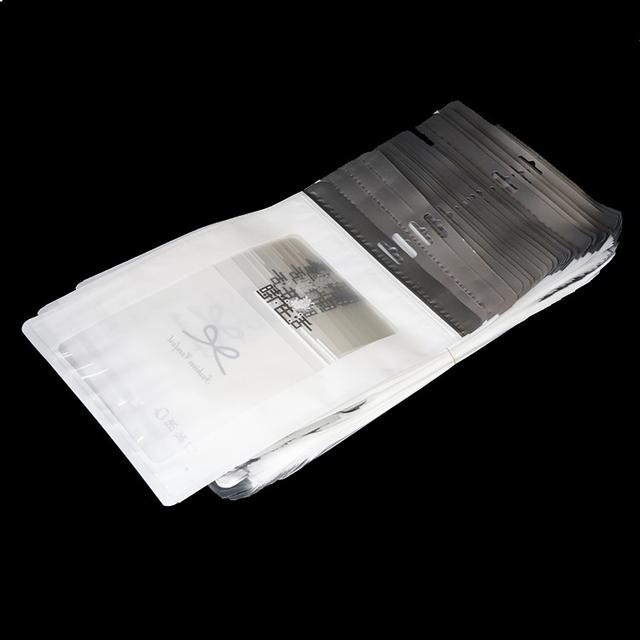
Bolsa compuesta OPP/CPP de caramelo (ventana transparente, muesca dentada, agujero colgante superior)
Packaging design is further refined to meet the specific characteristics of different candies: Hard candies prioritize transparency, utilizing a fully transparent structure with color printing; soft candies utilize an anti-stick coating on the CPP layer and a zipper closure, improving moisture resistance by 50% after opening and resealing.
Envasado listo para comer: Esterilización a alta temperatura y diseño de confiabilidad del sello: El envasado listo para comer debe abordar simultáneamente los desafíos de la esterilización a alta temperatura y el almacenamiento a largo plazo. Las bolsas de retorta de alta temperatura, con su estructura compuesta de tres capas, se han convertido en la solución líder de la industria. Estructura de protección de tres capas: Una combinación perfecta de alta temperatura y sellado: Las bolsas de retorta de alta temperatura utilizan un diseño compuesto de tres capas de PET / AL / RCPP:
• Outer PET layer: Withstands high-temperature sterilization above 121°C, ensuring deformation during retort.
• Middle AL (aluminum foil) layer: Reduces oxygen transmission rate from 43.37 cm³/m²/24h (compared to 43.37 cm³/m²/24h) of ordinary PET/PE bags to 0.5 cm³/m²/24h, effectively blocking light, oxygen, and moisture.
• Inner RCPP layer: Provides excellent heat-sealing properties, maintaining stable seal strength even after high-temperature sterilization.
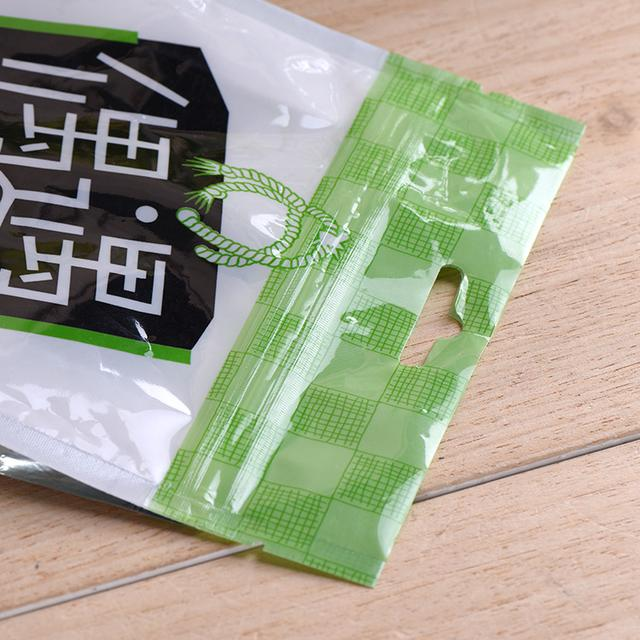
Structure of high-temperature retort bags for braised foods
Compared to ordinary PE bags, which can only withstand temperatures below 80°C, high-temperature retort bags can be used directly for prepared foods that require high-temperature sterilization, such as braised foods and meat sauces. The post-sterilization shelf life is up to six months, without the need for preservatives. Sealing Reliability Testing Standards
To ensure packaging stability, it must pass multiple rigorous tests: • High-temperature resistance test: Steam in 121°C water for 30 minutes and inspect for deformation and cracking. • Seal strength test: Heat seal strength must reach ≥35N/15mm (in compliance with GB/T 41168-2021). • Leakage test: Inflate or fill with water, squeeze, and observe for leaks.
Pre-prepared meal packaging: Combining heat resistance and ventilation: Packaging for microwave-safe pre-prepared meals requires addressing both heat resistance and ventilation challenges. Modern packaging is achieving breakthroughs through material innovation and intelligent structural design. Heat-resistant materials: From 121°C sterilization to 200°C microwave resistance: The heat resistance of pre-prepared meal packaging directly determines heating safety:
• Retort-grade composite film: For example, the BOPA/RCPP structure, with the inner RCPP material, can withstand high-temperature sterilization at 121°C.
• Ultra-high-temperature stand-up pouches: TCL’s developed PET/PA/PE composite film is microwave-resistant at 200°C, making it suitable for liquid pre-prepared meals such as soups and sauces.
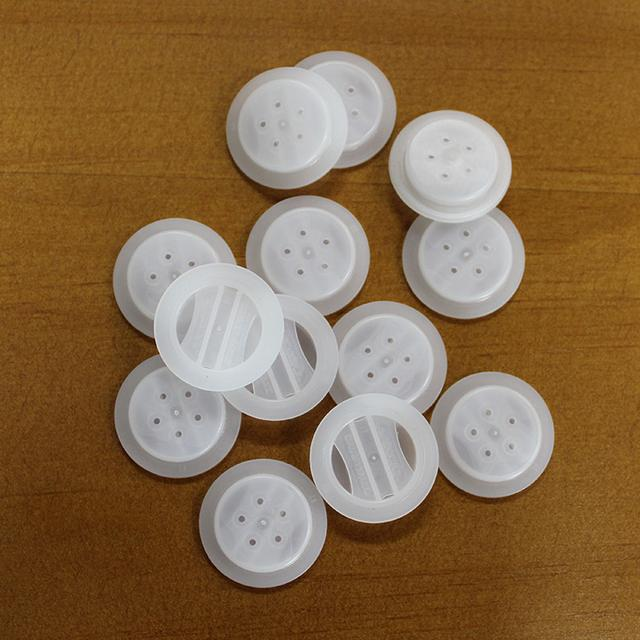
Smart venting structure: The core technology of anti-bulging bags: Steam pressure during microwave heating is the primary cause of bulging bag rupture. The venting valve design addresses this issue through a one-way pressure regulation mechanism. The raised dome venting hole features 5-6 micropores, which work in conjunction with a hollow annular seal to control the opening and closing pressure, achieving “directional steam discharge and preventing external air intrusion.”
Pre-prepared meal PP composite bag venting valve structure
Measured data shows that packaging equipped with this structure reduces internal pressure by 40% compared to conventional packaging during microwave heating, fundamentally preventing rupture and overflow. In-Depth Analysis of Packaging Forms: Application Scenarios for Three-Side Seal, Stand-Up Pouches, and Yin-Yang Pouches
Comparison of Core Parameters of Three Packaging Forms
Analysis of Application Scenarios by Form
Three-Side Seal Pouch: The most traditional packaging form, suitable for automated packaging of loose, non-sticky granular materials such as peanuts and melon seeds, and particularly well-suited for small-batch customization.
Stand-Up Pouch: With its bottom gusset design and zipper seal, it addresses the visual disadvantage of traditional flat bags, often seen as “lying down” displays. A case study of a nut brand showed a 25% increase in shelf conversion rate after adopting stand-up pouch packaging.
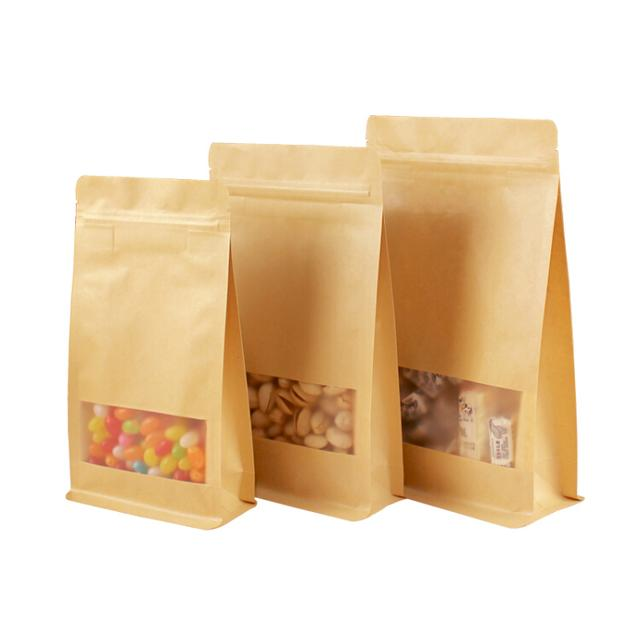
Display of Brown Kraft Paper Stand-Up Ziplock Bags
Yin-Yang Pouch: With its “non-transparent printing area + transparent display area” zoning design, it achieves a balance between brand messaging and product quality visualization, making it particularly suitable for high-end snacks and functional foods. Advantages of Yin-Yang Bag Packaging
Matching Package Size and Weight: Scientific Calculation Formula and Examples: Package size must be scientifically calculated based on the product’s weight and morphological characteristics. The following are package size matching solutions for common foods:
Calculating the Package Size of 100g Potato Chips: Potato chips are fluffy foods with low density and are fragile. The recommended dimensions are 18cm × 10cm × 2cm:
• 18cm width allows for easy single-handed handling. • 10cm height and 2cm thickness reduce transport damage. • Flat shape facilitates shelf display and saves retail space.
Calculating the Package Size of 250g Almonds: Almonds have a high density and uniform grain size. The recommended dimensions are 15cm × 20cm × 1.5cm:
• 20cm vertical length accommodates the natural stacking height of almonds. • 15cm width ensures easy one-handed access. The 1.5cm thickness allows for support for the self-supporting structure.
Jihaoyin Flexible Packaging Bag Quotation System: Jihaoyin utilizes a transparent pricing system that caters to all scenarios, from pilot production to mass production. It consists of three main components:
Basic Pricing: Material and processing fees are clearly separated.
Users can select the bag type, size, and material combination, and the system instantly generates a detailed quote. For example:
• PET/AL/CPP construction is recommended for acidic foods (strong acid barrier properties).
• KPET/CPP materials are used for oily products (optimal aroma retention).
• Processing fees are calculated based on the bag-making process and quantity, with no hidden costs.
Additional Charges: No plate-making fees, and special requests are clearly priced. Using HP Indigo digital printing presses eliminates traditional plate-making fees, with additional charges only incurred when special processes are selected. Special structures (such as stand-up pouches with spouts and puncture-resistant zippers)
Minimum Order Quantity Impact: Suitable for small batches; larger batches result in lower unit prices. • Small trial runs (1-500 pieces): Suitable for new product testing, e.g., 100 stand-up pouches at a price of 3 yuan each.
• Batches of 1,000 or more: Unit prices significantly decrease, e.g., 1,000 at a price of 1 yuan each, a 30% reduction compared to traditional printing.
Reference: 1,000 stand-up pouches with zippers (60mm x 80mm, PET/AL/PE) cost 800 yuan, including 600 yuan in material costs and 200 yuan in processing fees, for a unit price of 0.8 yuan per piece.
The choice of packaging format directly impacts product protection, user experience, and market competitiveness. By scientifically matching food characteristics with packaging format, companies can maximize the marketing value of packaging while controlling costs. Whether it’s a shatterproof stand-up bag for potato chips, a retort pouch for cooked food, or a degassing valve for pre-prepared meals, the core goal is to “protect the contents while ensuring consumers are comfortable using and excited by the product.”
For companies, packaging selection should establish a dynamic adaptive mechanism: select barrier materials based on the product’s shelf life, design opening and closing methods based on consumption scenarios, and plan production plans based on cost budgets. Only in this way can packaging truly extend product strength and amplify brand value.


