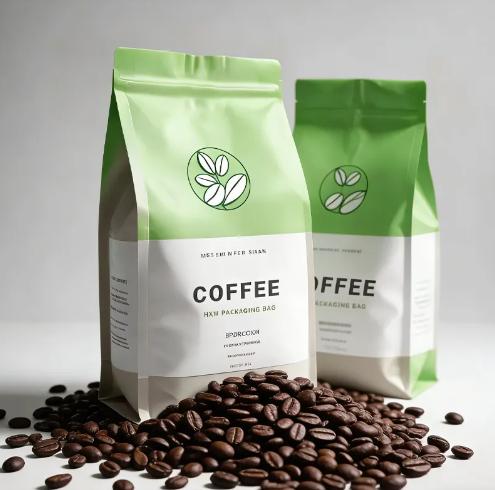


I. Tamaño del mercado y fuerzas motrices fundamentales
● Tamaño del mercado: El mercado mundial de envases de café es un sector en constante crecimiento. China es uno de los mercados de consumo más importantes del mundo, con una tasa de crecimiento superior al promedio mundial.
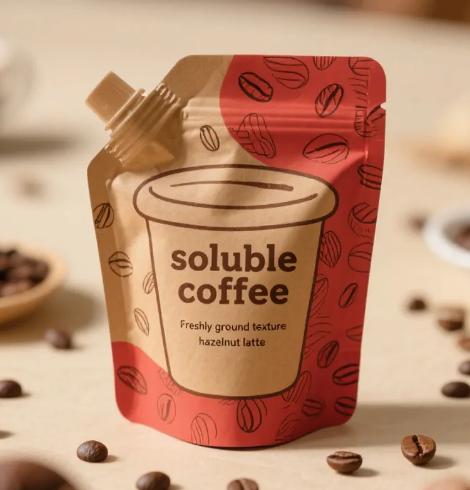
El mercado de Asia-Pacífico (especialmente China) – un motor de crecimiento y un terreno de prueba de innovación: Como la región de mayor crecimiento para el consumo mundial de café, el mercado de China exhibe la característica de “volumen y precio que aumentan juntos”. El aumento de las marcas locales y las nuevas fuerzas de consumo (como Sandunban) no solo ha impulsado la demanda de envases especializados (como minitazas y bolsas de pie) para nuevas categorías como café liofilizado y líquidos de café, sino que también ha acelerado la rápida iteración de los envases en términos de diseño, atributos sociales y conceptos ambientales. La localización de las cadenas de suministro (como la construcción de una fábrica en Kunshan) también ha intensificado la competencia en el mercado regional.
North American and European markets—mature and stable, with regulations driving transformation: Growth in these established markets is becoming more stable, fueled by consumption upgrades, convenience (e.g., coffee bags), and sustainability. Notably, stringent environmental regulations like the EU’s Packaging and Packaging Waste Regulation (PPWR) are reshaping industry standards by mandating recyclable packaging, recycled materials, and restrictions on hazardous substances, compelling global brands and suppliers to innovate technologically. The U.S. Extended Producer Responsibility (EPR) policy is also making an impact.
Conductor principal:
La conservación es esencial: los compuestos de sabor en el café son altamente susceptibles a la oxidación, absorción de humedad o transferencia de sabor. Por lo tanto, los envases de alta barrera sirven como piedra angular para mantener la calidad y prolongar la vida útil.
Mejora del café premium y del consumo: Con la popularización de la cultura del café premium, los consumidores tienen requisitos más altos para la funcionalidad del envasado (como el escape unidireccional), la estética del diseño y la experiencia de la marca.
Environmental regulations and consumer preferences: Globally, restrictions on plastic packaging and growing consumer awareness of environmental protection have strongly driven the development and application of biodegradable and recyclable materials.
Requisitos de comercio electrónico y portabilidad: La adopción generalizada de las compras en línea requiere envases con una mayor resistencia a los choques de transporte; Mientras tanto, escenarios al aire libre y de oficina exigen…
II. Proceso de producción y tecnologías clave
The core of the production process of traditional coffee bags is multi-layer composite and functional design.
| Pasos del proceso | Key Technologies and Objectives | especificar |
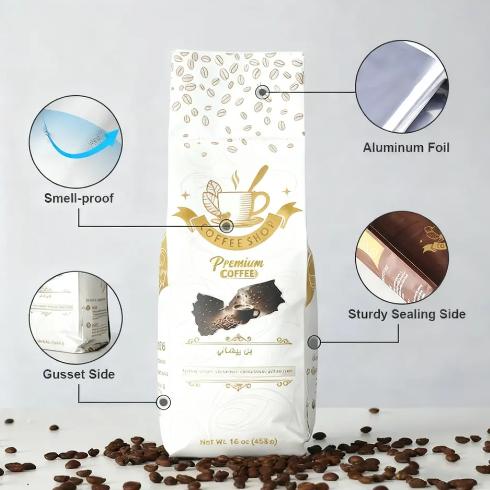
| composite material | Multi-layer co-extrusion/dry lamination: Constructing high barrier foundation. | The typical structure consists of PET/AL/PE: the outer PET layer provides strength and a printing surface; the middle aluminum foil (AL) serves as the core barrier against oxygen, moisture, and light; the inner PE layer is used for heat sealing. Higher-end versions may replace aluminum foil with high-barrier materials like EVOH to enhance recyclability. |
| functional component integration | Installation of one-way exhaust valve: releases carbon dioxide and blocks oxygen. | This is the “soul” of coffee bean packaging. After roasting, coffee beans continuously release large amounts of carbon dioxide. This valve allows gas expulsion while preventing external oxygen from entering, thereby avoiding bag rupture and maintaining freshness. |
| Sealing and molding | Hot sealing technology: Ensures the integrity of the seal. | The bag opening is thermally sealed by precisely controlling temperature, pressure, and time. Advanced laser welding technology has also been applied to the sealing of high-end or biodegradable materials, offering advantages such as high precision and minimal heat-affected zone. |
| Printing and Back-end | Gravure/flexographic printing: Achieve brand and information transmission. | The outer PET film is ideal for high-quality printing. The industry trend is to use eco-friendly water-based inks and combine techniques like cold stamping to enhance the texture. |
Note: For bagged coffee, the production process emphasizes the selection of food-grade filter bag materials (e.g., non-woven fabric, corn fiber) and precise quantitative packaging to ensure optimal permeability and brewing efficiency.
III. Primary Application Scenarios and Packaging Selection
The application of coffee bags is highly dependent on product form and consumption scene.
| application scenarios | Main Packaging Forms and Characteristics | Core Requirements |
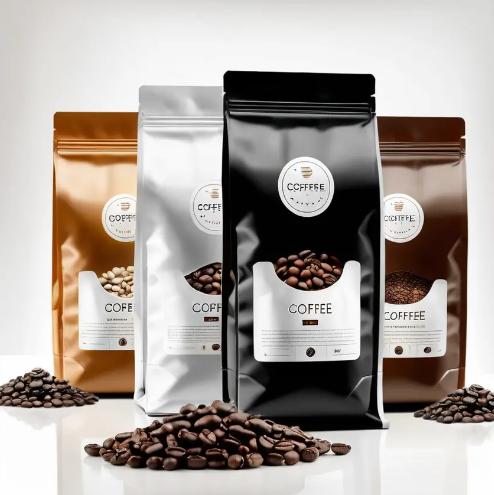
| Offline retail/boutique coffee beans | Aluminum foil self-supporting bag and accordion bag with one-way exhaust valve. | Extreme freshness preservation (high barrier, air-extraction), shelf display (aesthetic design, self-supporting), and tactile experience. |
| Instant coffee/coffee powder | Vacuum-sealed packaging (hard bags), composite film bags with three or four sides sealed. | Moisture-proof and anti-caking (high water vapor barrier), cost-effective, and easy to tear open. |
| Portable/Ready-to-Drink scenarios | Bagged coffee (similar to tea bags), small-dose strip packets. | Rapid dissolution/extraction (critical to filter bag material), portability, and quantitative control. |
| E-commerce / Bulk Transportation | The packaging of the thickened composite film bag with deoxidizer inside. | Anti-puncture and anti-tear (for logistics), with secondary sealing (e.g., zipper) for consumer convenience. |
IV. Key Development Trends
Material sustainability: Biodegradable materials (e.g., PLA-PBAT blends) and single-recyclable structures (e.g., all-PE composites) are key R&D focuses to comply with regulations and appeal to eco-conscious consumers.
Smart features: Integrated smart labels (e.g., freshness-indicating color-changing ink) and QR code traceability enhance consumer trust and interactive experience.
Design with experiential focus: Packaging isn’t just visually appealing—it emphasizes sensory details like the feel of opening, the tearing sound, and stability when standing upright, all of which become integral to brand value.
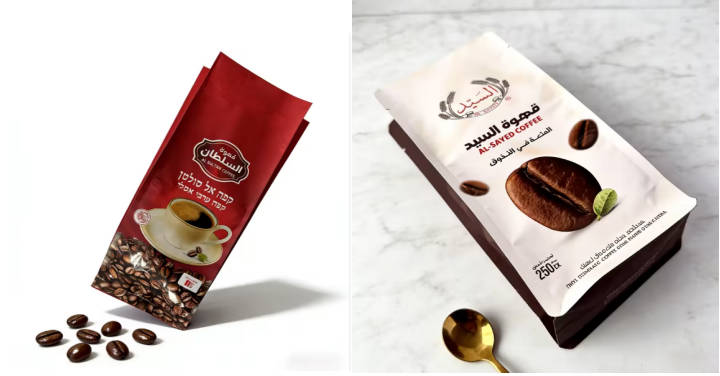
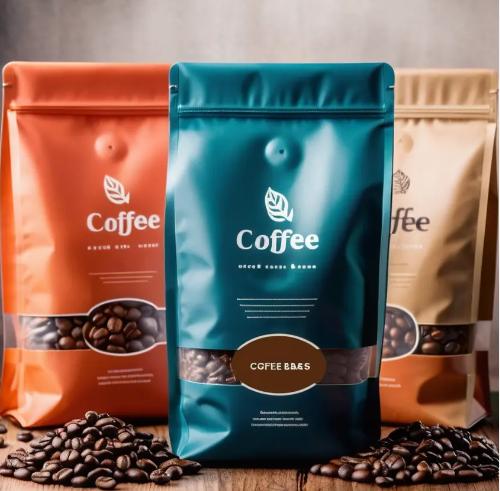
Innovative structural designs—such as self-standing bags with irregular shapes, suction bags (though not featured in this product, they are commercially available), and zippered bags that are easy to reseal—collectively enhance convenience.
In summary, modern coffee soft packaging bags are far more than just containers; they represent an integrated product of materials engineering, food science, and brand marketing. For industry practitioners, keeping pace with trends in preservation technology, eco-friendly materials, and experiential design is crucial for developing competitive products.